
Protesting 101
How nonviolent protests can and DO work to bring down fascist regimes

For many of Americans, April 5 was their first time attending a protest. I’m SO proud of each and every one of you who took that step! That day of action was hopeful, empowering and fantastically well-attended (some estimates say 5 million people hit the streets!).
But in order for it to lead to real change, April 5 will need to be only Day One of a strategic, long-term protest movement.
As many of you know, I have a Bachelor’s Degree in Peace Studies from before I went to nursing school. That means I spent four years studying nonviolent social movements, and how to take down immoral regimes without bloodshed. I’ve been attending protests since I was a baby activist way back in high school marching against the war in Iraq.
When I encourage people to attend a protest, I hear two main reasons for declining:
It’s scary. I’m worried about it turning violent, or getting arrested or tear gassed.
It won’t make any difference. Nobody in power cares that we’re protesting.
Both of these concerns are based on common misconceptions. In general it’s actually quite safe to attend a peaceful protest in the US. And sustained nonviolent action absolutely has the potential to be effective in our current crisis. So let’s talk about it. Here are some FAQs about protesting, asked by our followers:
How likely are these protests to turn violent? What can we do to keep protests peaceful?
When we’re talking about mass protests like the April 5 one organized by
: Very unlikely. There are different types of violence that people might be concerned about, so let’s break it down:Violence from other protestors: The 50501 Movement is explicitly peaceful. It says in big bold letters on their website and social media that violence of any kind will not be tolerated. I think most of us inherently understand that harming people or property during a protest against Trump only harms our credibility and plays into the false narrative MAGA would like to tell about us. (You’ll notice, by the way, that millions of people marched on April 5 and nobody stormed any capitol buildings).
Violence from MAGA/counter-protestors: At most protests I’ve attended, I’ve seen a small handful of counter-protestors. Sometimes it’s just one sad guy with a megaphone yelling that we’re all going to hell. At the April 5 protest, all I encountered was one white lady driving past giving us all a thumbs-down. If there’s a bigger group, law enforcement usually separates them from the main protest. You keep the peace by literally just ignoring them. Walk right past them and don’t engage. If you see someone engaging with them, bonus points for encouraging them to keep on moving so that nothing escalates.
Violence from police: Peaceful, legal protest is allowed in the United States! Organizers of a mass protest will have obtained a permit if necessary (you don’t need a permit to march in the streets or along sidewalks as long as you’re not obstructing traffic or access to buildings). Again, take April 5 as an example: With a few million people protesting in 1,100 cities, we did not see mass arrests, tear gas, or violence from police.
* There are certain types of protests where the point is to break an unjust law and get arrested (think: Rosa Parks refusing to give up her seat on the bus). For those specific types of protests, organizers make plans for that (put people who are willing to get arrested at the front, provide trainings for exactly what to do, etc). I talk more about this below.
* I do think that non-citizens have a reason to be cautious of protests, considering that we have seen some immigrants have their status revoked for protesting against the genocide in Palestine. They might want to keep their participation off social media or decide to stay home - that’s an individual risk calculation depending on your particular situation.
Your run-of-the-mill protest rally or march is highly unlikely to turn violent. Personally I have never experienced violence at a protest.
What will happen at the protest?
In general, protests go like this:
Everybody meets up at an agreed-upon starting point.
You listen to some people speak to the crowd (movement leaders, government reps who are on our side, people who have been affected by the issue, etc). Usually the sound system isn’t great so everyone in the back struggles to hear 😂 In that case, chat with your neighbors.
Then you all march slowly together along a set route. Organizers lead chants. You check out everybody’s homemade signs and compliment your favorites.
At the end of the march, everybody gathers again for more speakers. Stay as long as you want.
Sometimes it’s a rally instead of a march, so you gather in a high-visibility area to wave your signs. Supportive folks drive by and honk, and everyone cheers. Some folks lead chants.
Here’s a video from the April 5 protest I attended in a smaller suburb of Seattle:
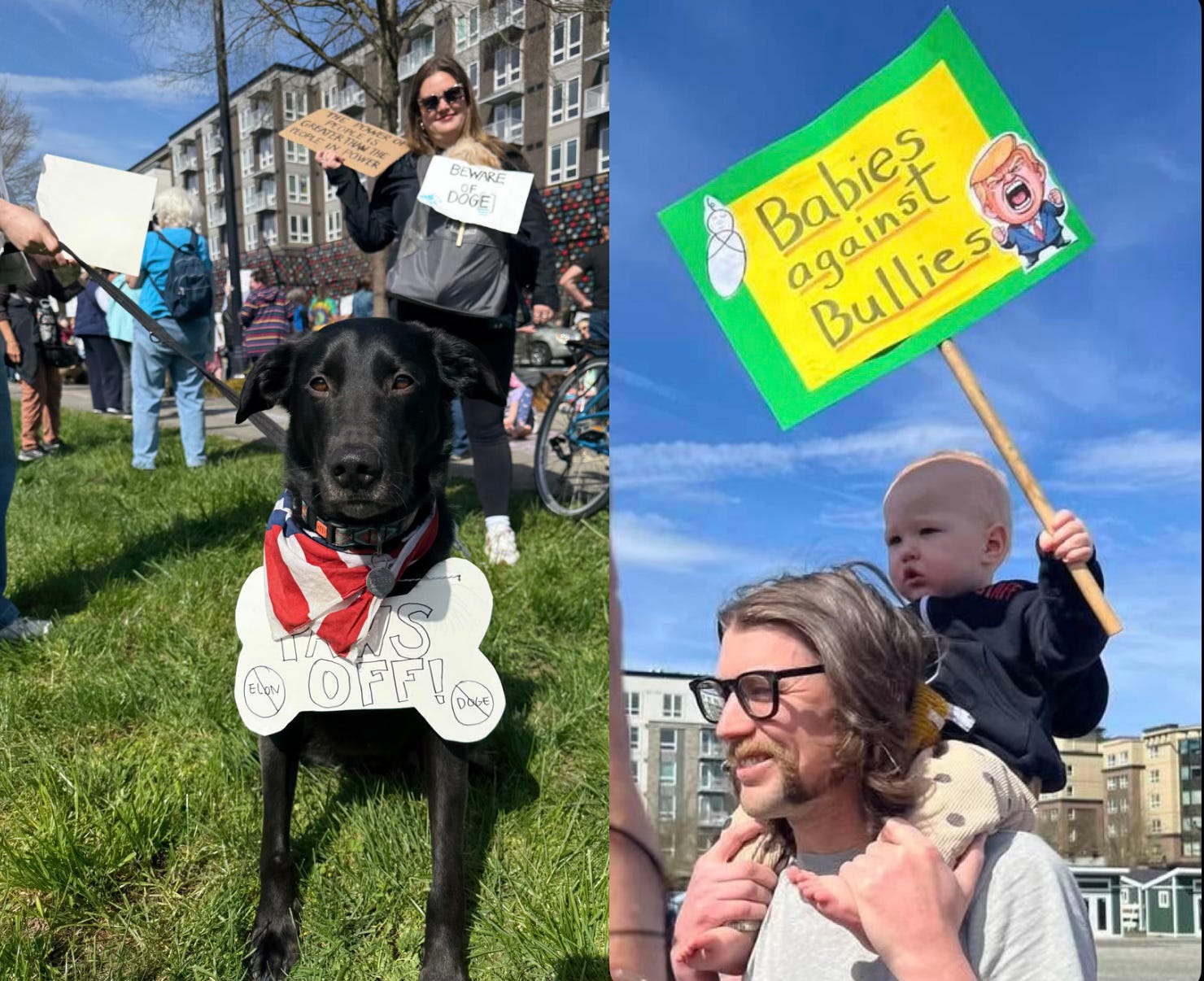
It’s not nearly as scary as it probably seems if you’ve never been to a protest before! Lots of people bring their kids and dogs.
What’s safe (or not) to bring to a protest?
I bring a little backpack with my wallet, snacks, water, my phone, and a mask. (Personally I only wear my mask outdoors if I’m in a tight crowd. But at a left-leaning protest nobody will bother you for masking and you’re unlikely to be the only one.) Remember sunscreen if it’s a sunny day! Wear comfy clothes and shoes you can walk in.
Carpool or take public transport if you can because parking will be a challenge, particularly in big cities.
Bonus tip for fun: Have your friends over for a sign-making party beforehand! Do a google image search for protest signs, or scroll through the organizers’ social media accounts for inspiration. Having the funniest/wittiest sign at the protest is like being a celebrity because everyone wants to take your picture.
You may see social media posts where activists tell you to go to great lengths to prepare for a protest (cover your face with a mask to protect your identity, leave your phone at home or turn off location tracking, write your lawyer’s phone number on your arm in sharpie, etc). In my opinion, these folks are getting a bit carried away. I personally do not think we’re at a point where US citizens need to hide the fact that you participated in a peaceful protest.
These types of mass protests are not the kind of activism where people are going to be arrested or tear gassed. It’s legal to march down the street waving a sassy sign with a group that has a permit. We are not talking about occupying buildings, purposefully blocking traffic, etc. Those types of protests have a strategic function, but that’s not what we’re talking about here.
I’m literally writing a public post encouraging peaceful protest. I put pictures of myself at the April 5 protest on social media. I wouldn’t be doing those things if I thought there was currently a chance that the government would persecute me for these actions. If I believed we were in a situation where tens of thousands of American citizens attending a peaceful, legal protest were all at risk of being arrested by our government, Aaron and I would already be making plans to leave.
* I'm saying this as a white woman who is a US citizen. If I were someone likely to be targeted by ICE, I would have a different risk calculus and likely would not be attending protests.
As one of our followers told me:
“I brought my three-year-old and six-month-old to the original March for Our Lives protest in 2018, and went to several while 34-36 weeks pregnant protesting Dobbs! Felt safer there than a lot of other places.”
Click on the post below for some tips if you’re feeling anxious about protesting:

Keep in mind: You can decide your level of involvement. You can go to a protest, stay on the edges, get a sense of the vibe, and if it feels unsafe to you - just leave!
Any concern that Trump will see the protest, invoke the Insurrection Act, and use military force on American citizens?
I've stopped trying to predict what Trump will do. But one of the first rules of fighting fascism is: Do not comply in advance! Meaning, don't make a fascist takeover easier by following rules they haven't even set yet.
As of now, peaceful protest is still allowed in the US - as evidenced by the fact that millions of people marched all over the country on April 5 and we did not see mass arrests or violent pushback from police.
We can't decide not to protest because we're afraid Trump might outlaw protests. We can't stop allowing LGBTQ folks to get married because we're afraid Trump's Supreme Court might overturn marriage equality. We can't stop providing birth control and legal abortions because we're afraid Trump might outlaw them.
Do not comply in advance.

Is is more impactful to go to a protest with a bigger attendance (like a big city)?
In general, no. For mass protests, it’s important to see people protesting everywhere. It’s incredibly impactful to see significant numbers of protesters in rural areas and red states. That visual diminishes Republicans’ ability to say that only leftists or “coastal elites” care about our crumbling democracy. Plus it’s a great opportunity to meet like-minded folks AND see that you’re not nearly as alone as you maybe thought you were.
If there’s a local protest near you, round up your friends and family and go.
Now let’s discuss people’s other most common concern: That protests don’t make a difference.
What do I say to people who tell me that protests don’t matter because “Trump won’t care”?
What is their solution, then? Do nothing and accept fascism without a fight?
A single march won't make a difference, true. But sustained, strategic nonviolent protest movements absolutely work. See: The American civil rights movement, India's independence movement, the end of apartheid in South Africa... Chile, Serbia, Poland, Georgia, Phillippines, I could go on! We can make April 5 Day One of a sustained protest movement, or we can decide we will fail before we even try.
Do protests really accomplish anything?
There is a common misconception that protests don’t really do anything. They’re just about making people feel good and sitting in a circle singing kumbaya. But that’s not true!
When protests are done correctly, they are tactical, strategic, and effective. Research has actually shown that nonviolent movements are twice as likely to succeed as armed conflicts. There’s a lot of theory behind methods of nonviolent resistance. Let’s get into it a bit:
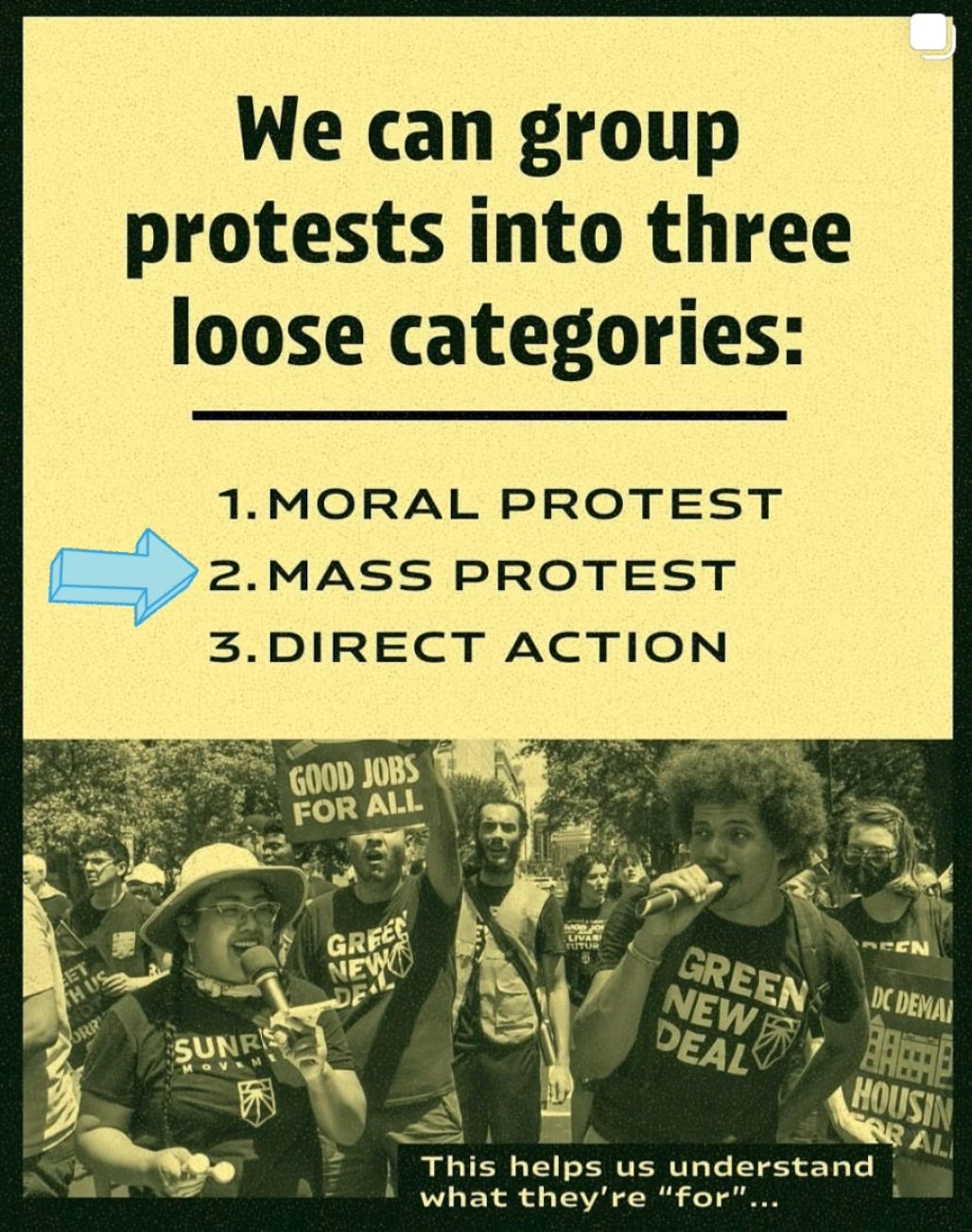
#2: Mass Protest is what we did on April 5.
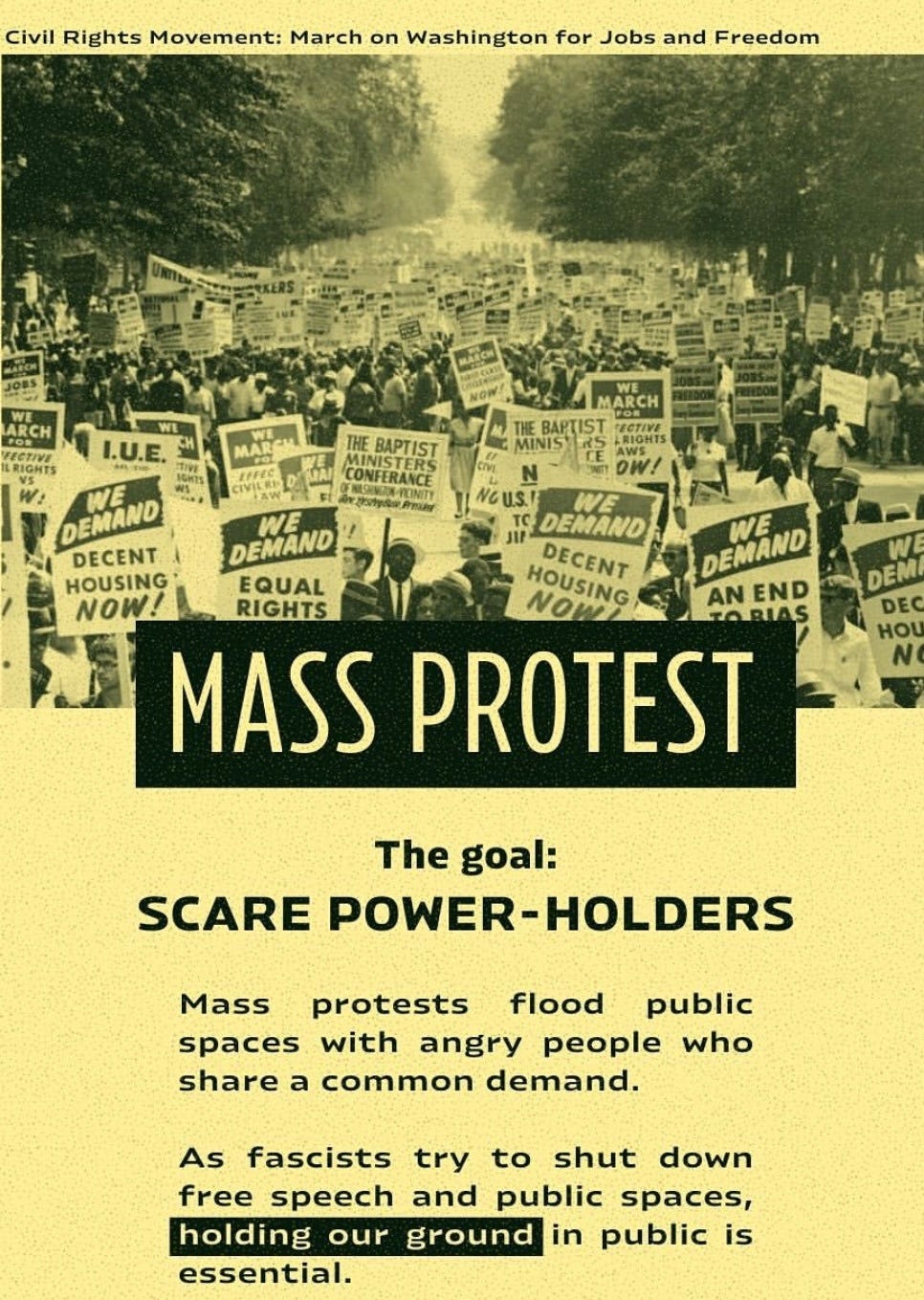
The goal of a mass protest is to show the Trump administration how many of their citizens oppose what they’re up to, and are mad enough about it to hit the streets.
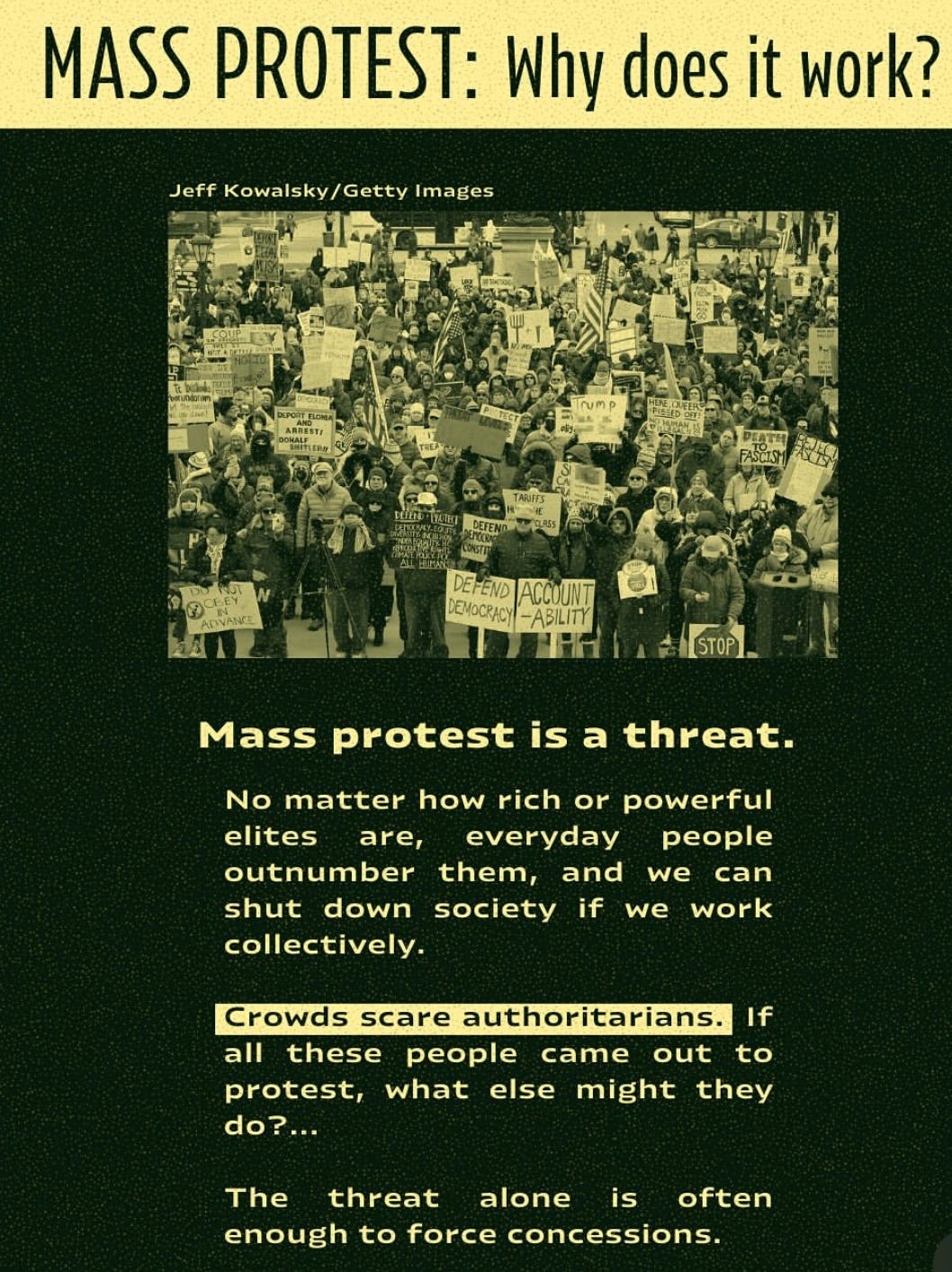
For this type of protest, we want NUMBERS. It was planned for a weekend so that as many people as possible could attend.
Other types of protests have different tactics and goals. For example: moral protests and direct action.
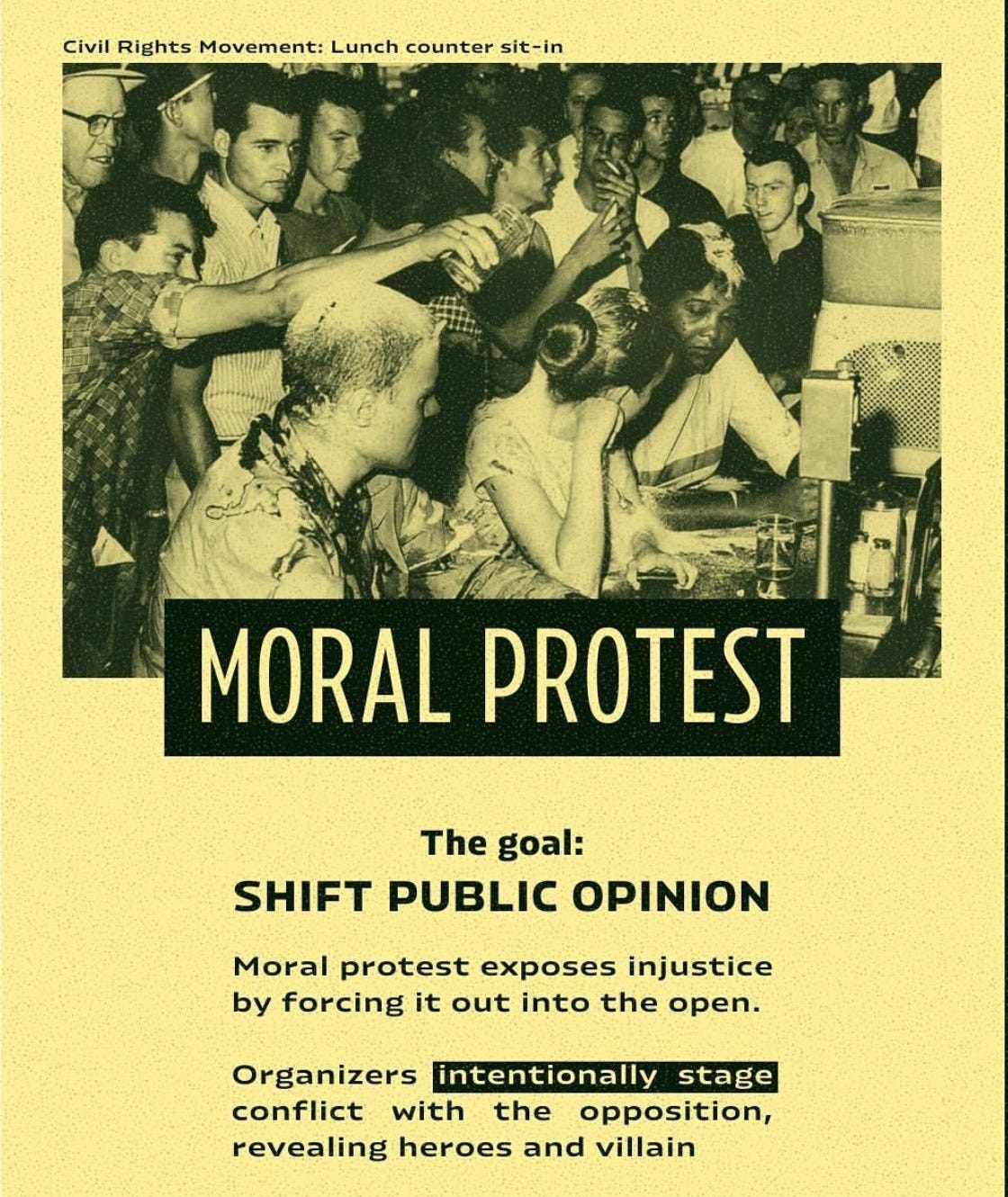
For example: The lunch counter sit-ins during the Civil Rights Movement were a moral protest. Activists sat at "whites only" lunch counters and endured harassment from white customers. This peaceful protest (at least on the activists' side) illustrated to the world which side was actually immoral.
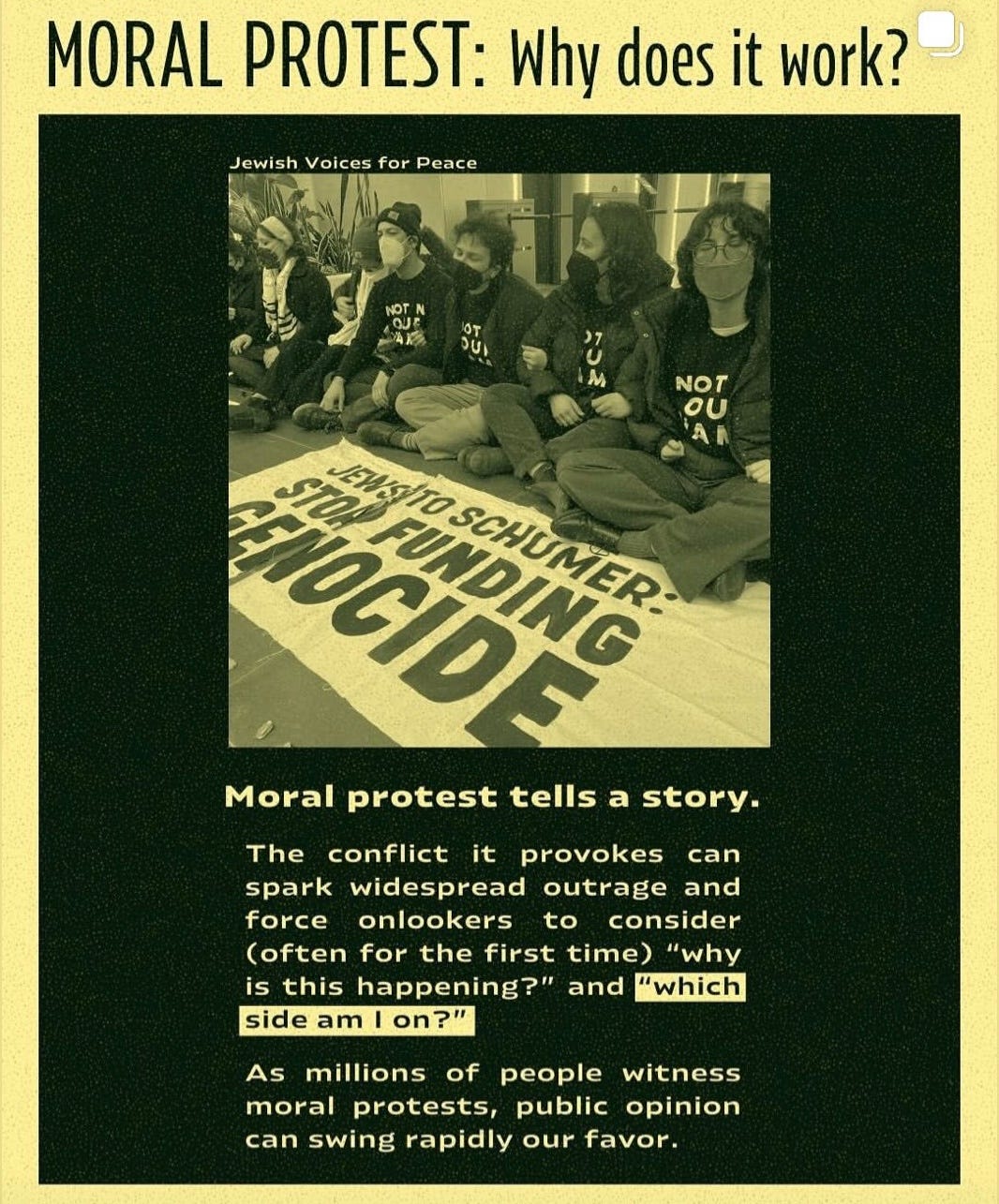
For moral protests, the number of participants generally isn't as important. You don't need 3 million people sitting at segregated lunch counters to make the point.
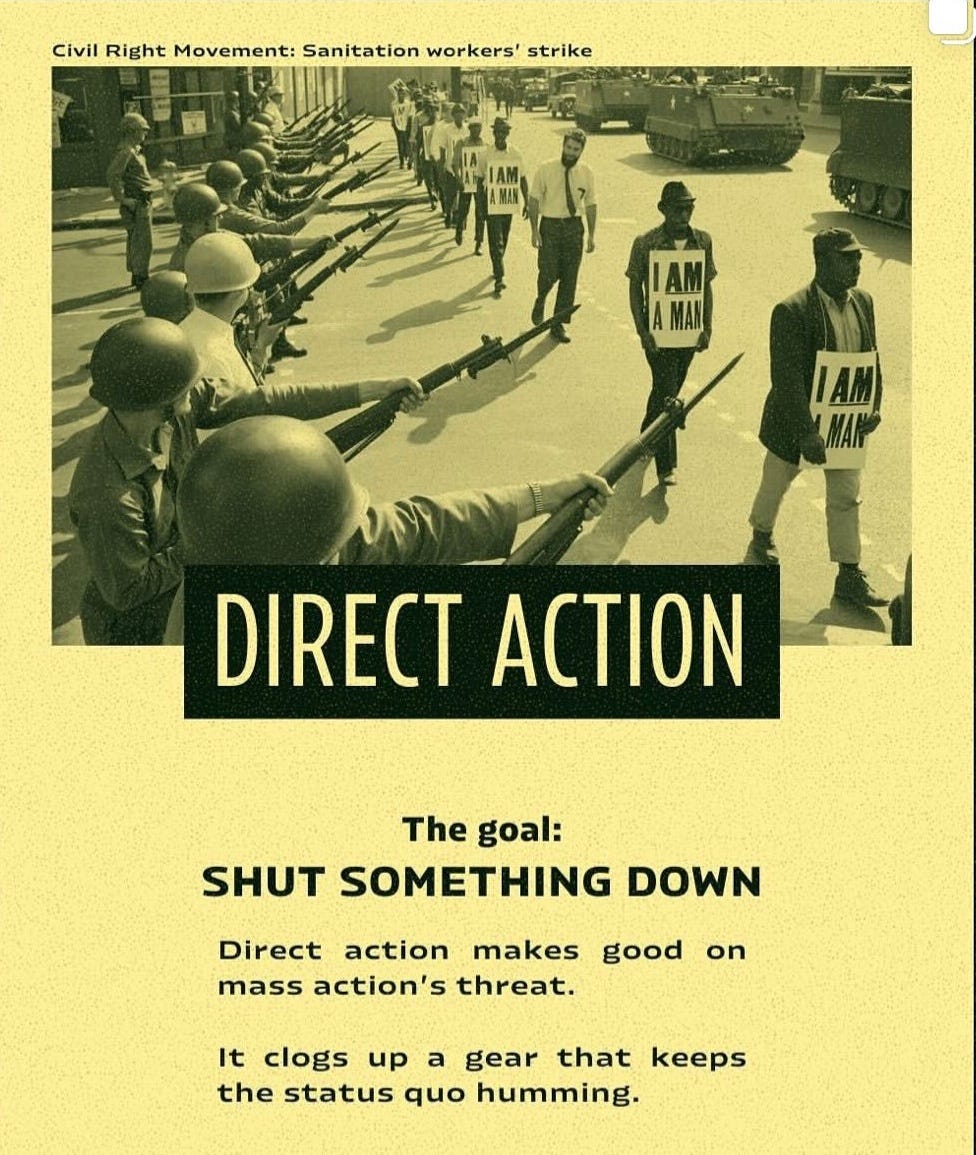
Direct action is what many people think of when they imagine a protest. Think: Walking out of work for a workers' strike, protestors blocking a highway or occupying a building, etc. It is an action that literally prevents business from continuing as usual.
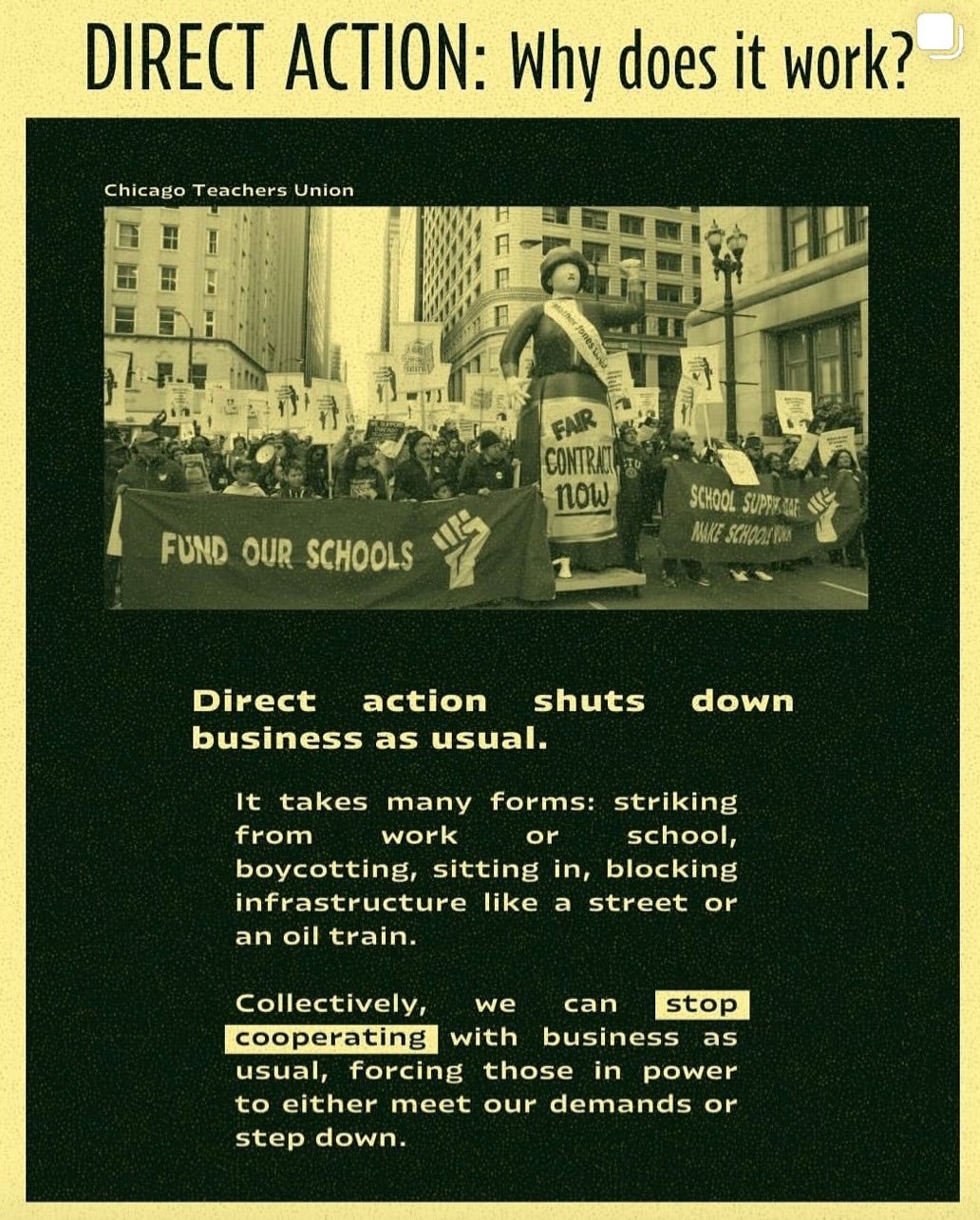
Again, direct action needs to be strategically planned: A workers' strike or walkout would obviously have to take place on a weekday. Blocking infrastructure would happen at a significant time and place.
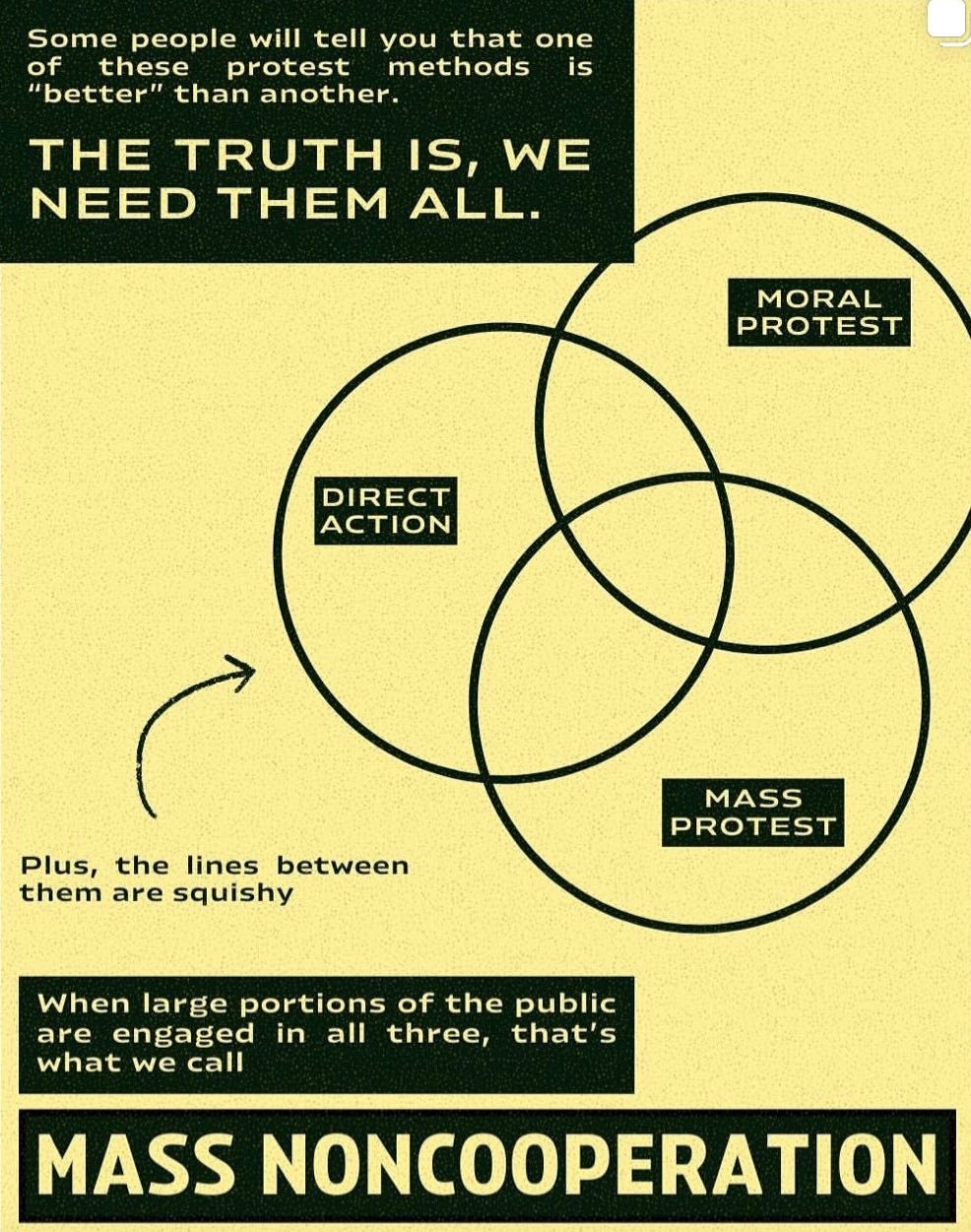
An effective movement needs to use ALL of these strategies. But everyone doesn't have to do everything. Participate when and how you are able!
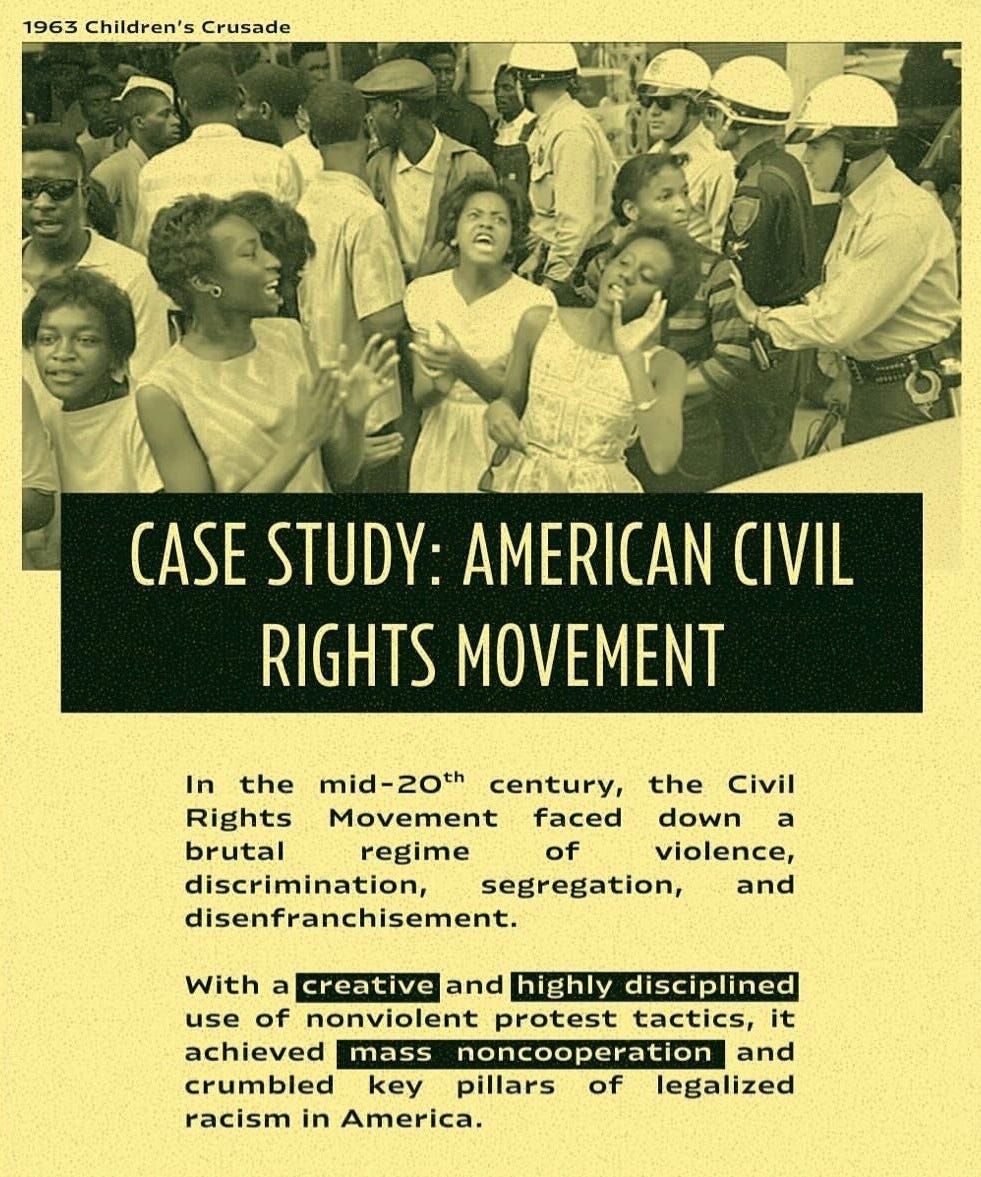
Think about the American civil rights movement: It didn't succeed overnight with one big march! It took sustained, strategic resistance over a period of years. We can do this but we've gotta be in it for the long haul!
Ever heard of the “3.5% rule”?
Research has shown that no government can withstand a challenge by 3.5% of its population without either accommodating the movement or collapsing.
Active, sustained resistance from just 3.5% of Americans would ensure real political change. There are about 260 million adults in the United States. That means we would need 9 million people to join the resistance against the Trump administration.
75 million Americans voted for Kamala Harris. Some estimates show that 5 million people marched nationwide on April 5. That’s a damn good start! (Particularly considering that many immigrants and people of color, who are on Team Democracy, didn’t feel safe to physically attend a protest). Imagine if next time we hit the streets, everyone brought a friend.
And there are many other ways for everyone to participate in the resistance, whether or not you’re able to take to the streets: Boycott companies that support Trump and Musk (Amazon, Target, and Walmart are big ones); regularly call your representatives; have conversations with your friends/family/coworkers; connect with a local organization that’s fighting back or supporting vulnerable people. Let’s get to that 3.5%!
✅ Action Step for This Week:
Make a plan to attend your next protest! For this movement to be effective, it will require sustained action. April 5 was fantastic! But remember that it’s only the beginning.
There is another nationwide protest planned for Saturday April 19. Bring your friends and family!
✨ A Little Joy:
Courtesy of the Instagram account @__we_love_you_ (I highly recommend following these lovely guys).
🏠 What We’re Up To:
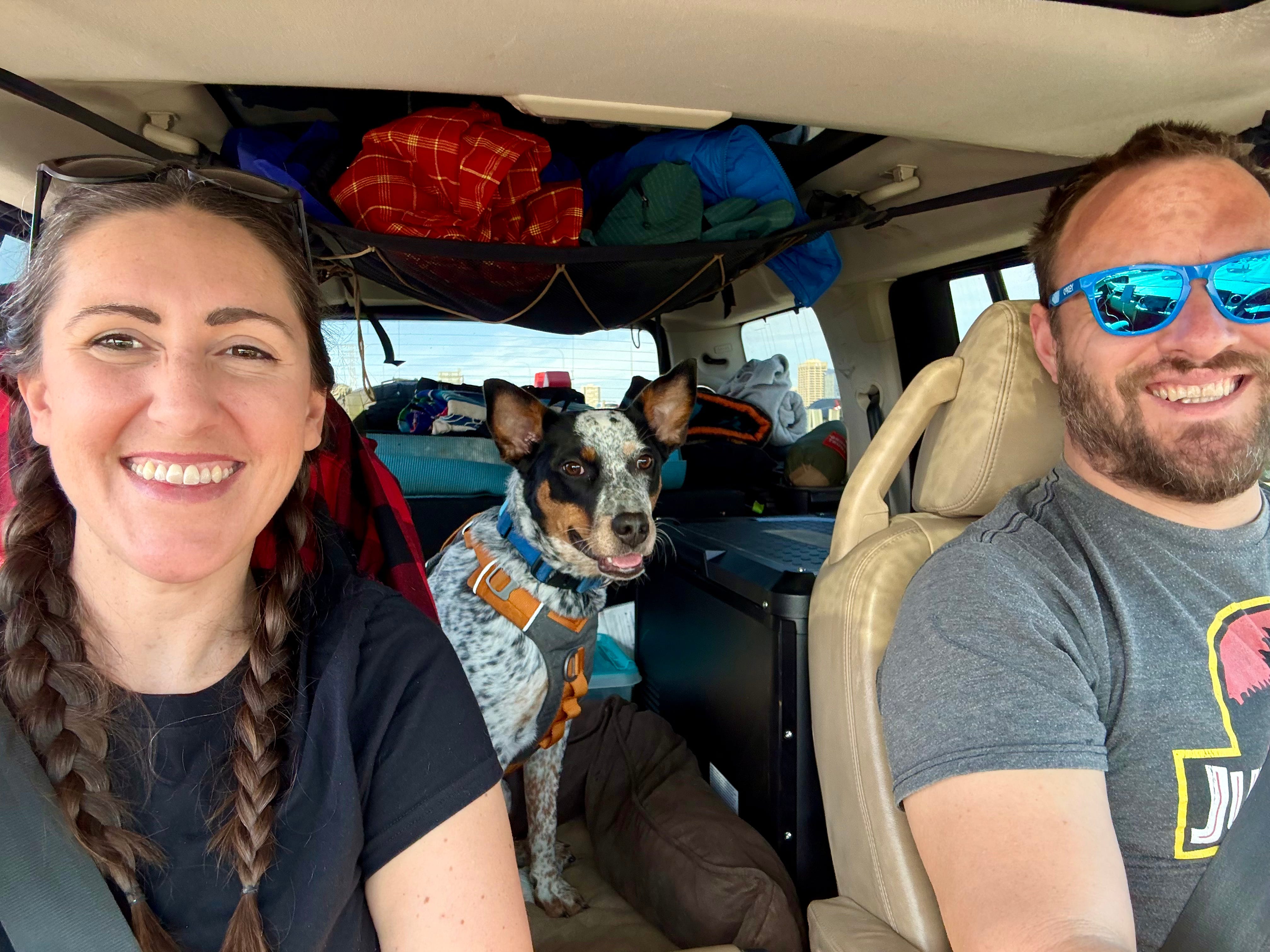
We took Rocket on her first camping trip right after the April 5 protest, and she did great! Aaron’s spring break from school is this week, so we’re planning to hit the road for a few days.
Thank you for being here - I’m proud of you all for being part of the resistance!